Muslim Fathers
#007e35
Signature
#002d01
Dark ground
#fbbc00
Accent
#ffeec5
Tint
#ffffff
Ground
#000000
Type
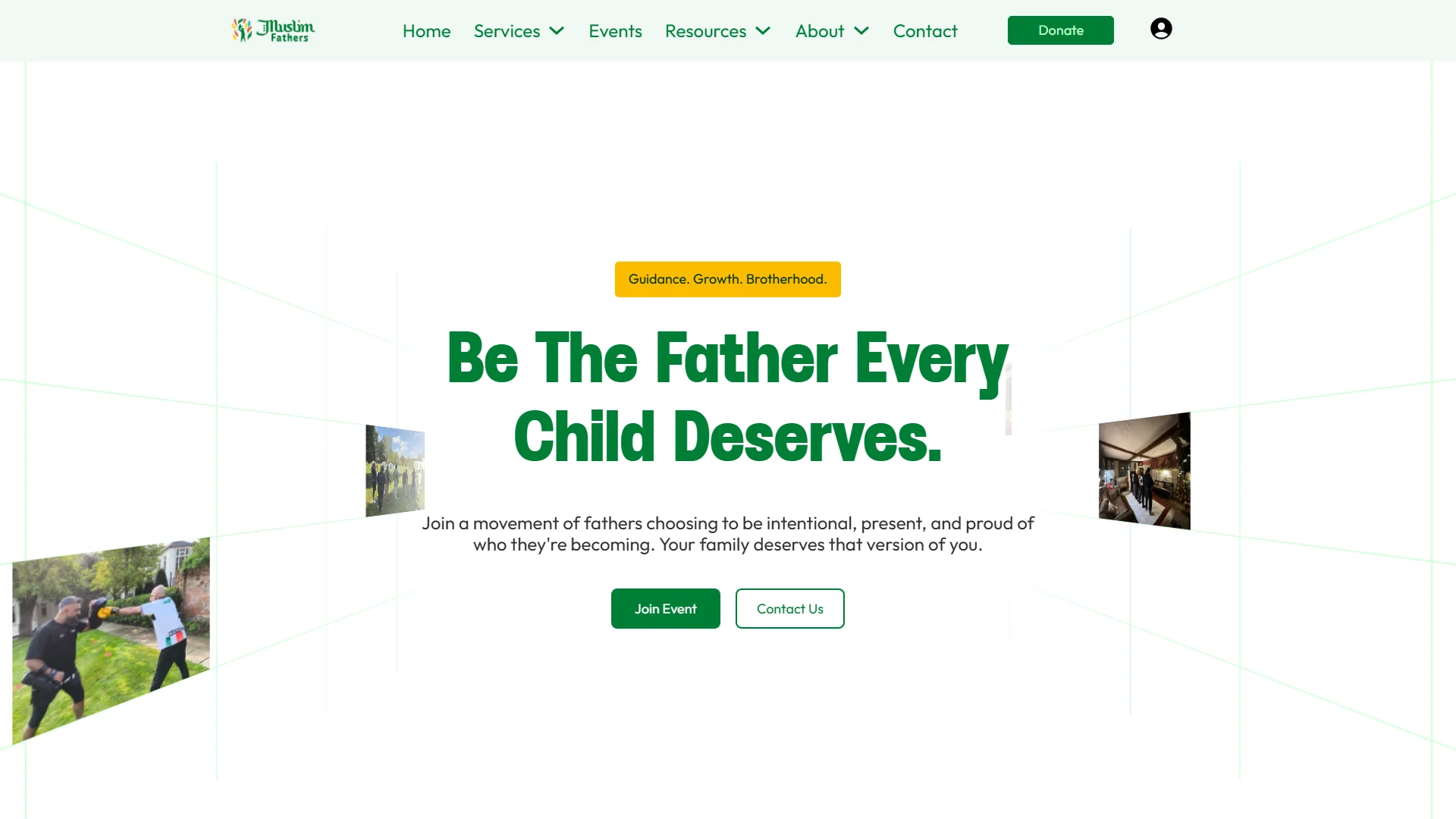
Muslim Fathers is an organisation supporting fathers to be more present and more active in their children's lives, and to build stronger relationships with their sons and daughters. We built the site around the things they add to constantly — events, resources and services — all managed by them rather than by us. It carries a donation page, a large number of pages across several custom post types, and a hero built to be the thing people remember.
Where they began
A growing programme with a lot to publish and no wish to come back to a developer every time they publish it. The site had to be large from the start and had to stay easy to add to.
What was hard
An organisation like this grows by doing things — running events, publishing resources, adding services. A site that needs a developer for each of those becomes a bottleneck inside a month, so everything they add regularly had to be theirs to add.
It is also a large site: a lot of pages covering several distinct kinds of content. That is a structural problem before it is a design one. Get the content types wrong and every page built afterwards fights the system.
And the subject needs care. Encouraging fathers to be more involved has to be warm and welcoming rather than instructive — nobody responds well to being told they are getting it wrong.
What we built
The content types came first. Events, resources and services are each their own structure rather than pages written by hand, so adding one means filling in fields, not building a layout. Given the number of pages this site carries, that single decision is what keeps it maintainable.
The donation page was treated as a real destination rather than a button in the footer. If asking for support is part of how the organisation runs, it deserves a page that actually makes the case.
Calls to action run throughout rather than sitting only at the end, because the useful next step varies — come to an event, read something, get in touch, give.
The hero is where the design effort concentrated. It is the first thing anyone sees and it decides whether the rest gets read at all.
The key parts
6 features we would like to highlight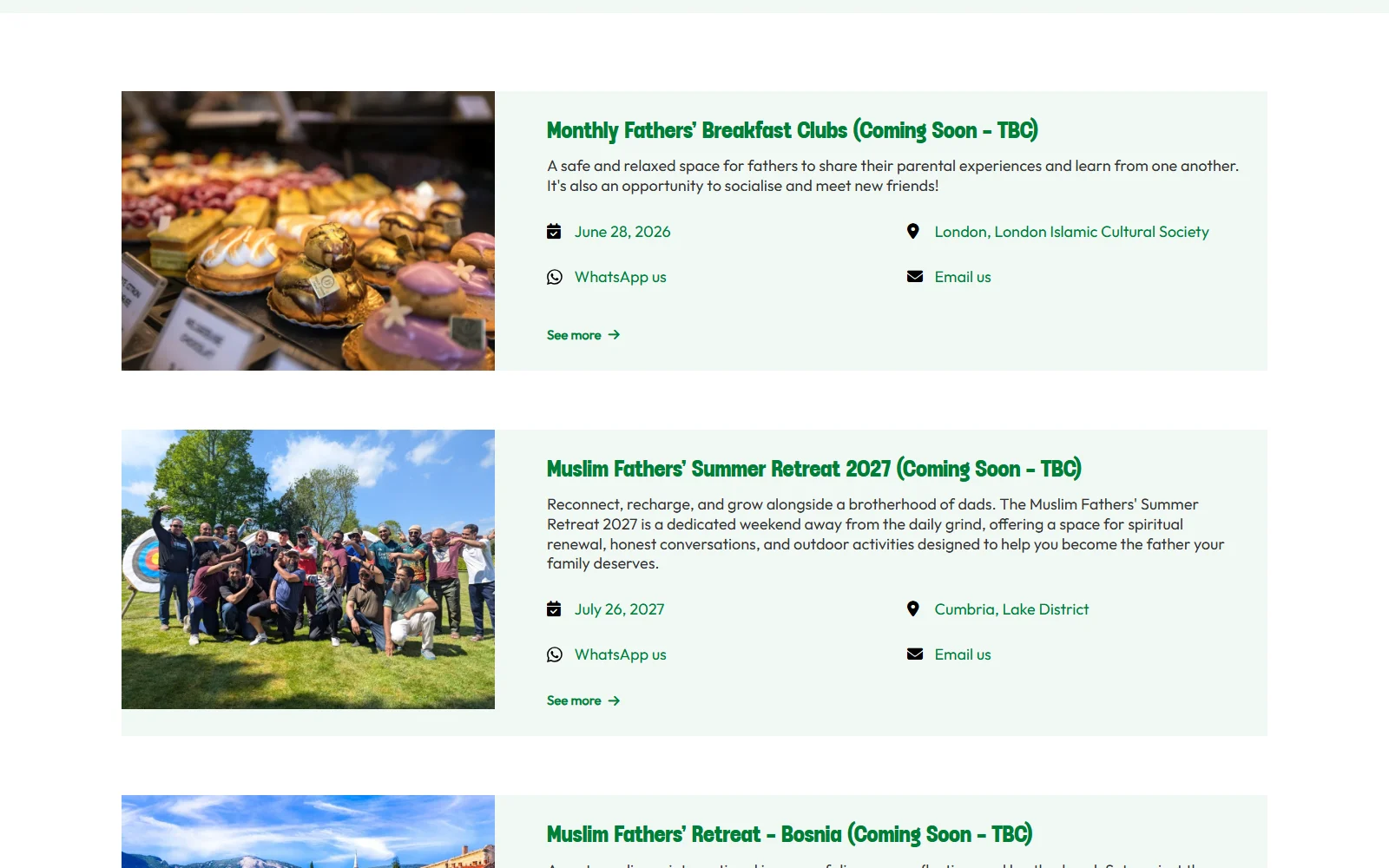
Events they run themselves
Events are their own content type, added and edited by the team. The organisation's whole model is doing things regularly, so publishing one had to take minutes and involve nobody else.
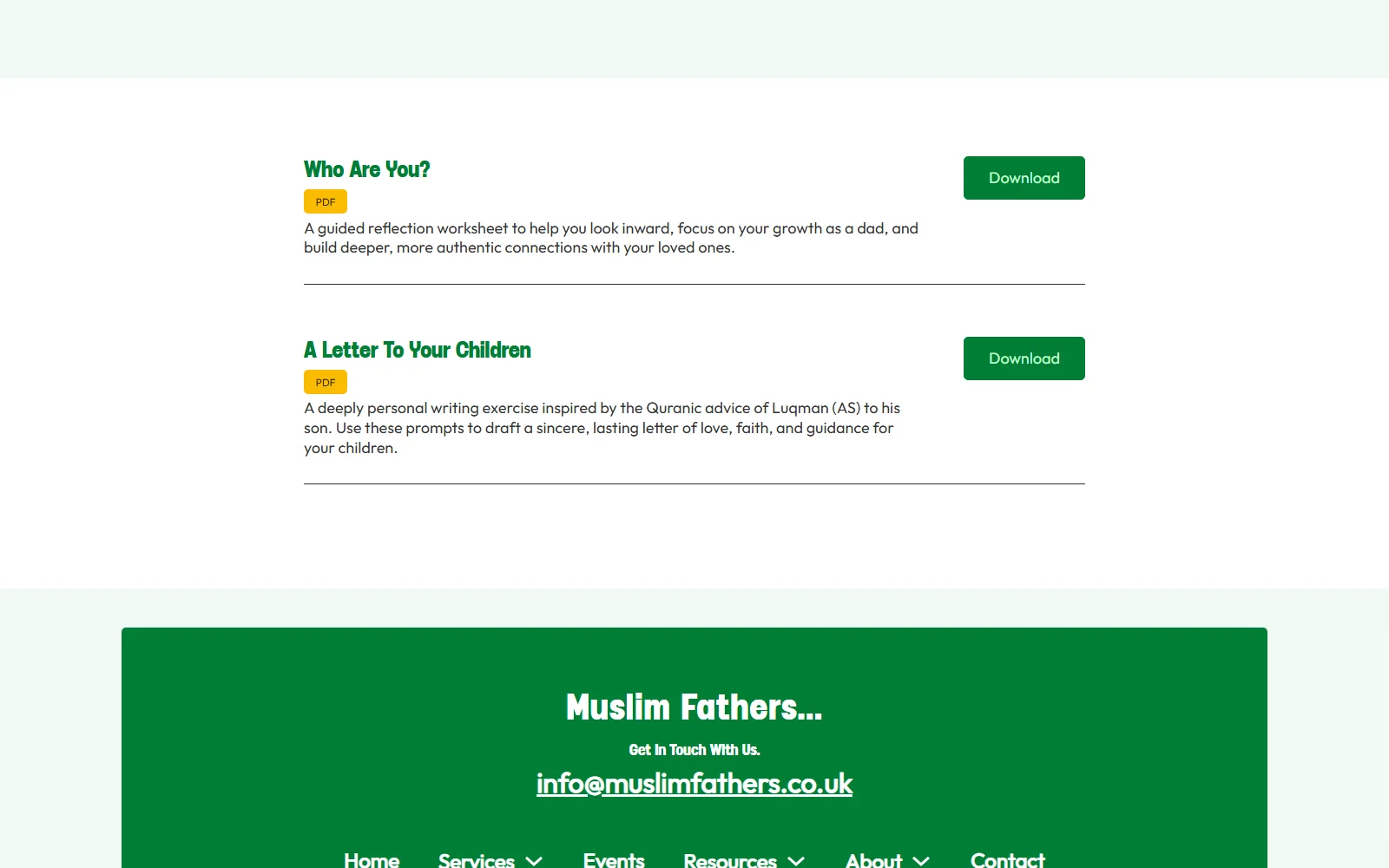
Resources that keep growing
A resources library built to be added to indefinitely rather than a fixed page that goes stale. New material goes up as it is produced.
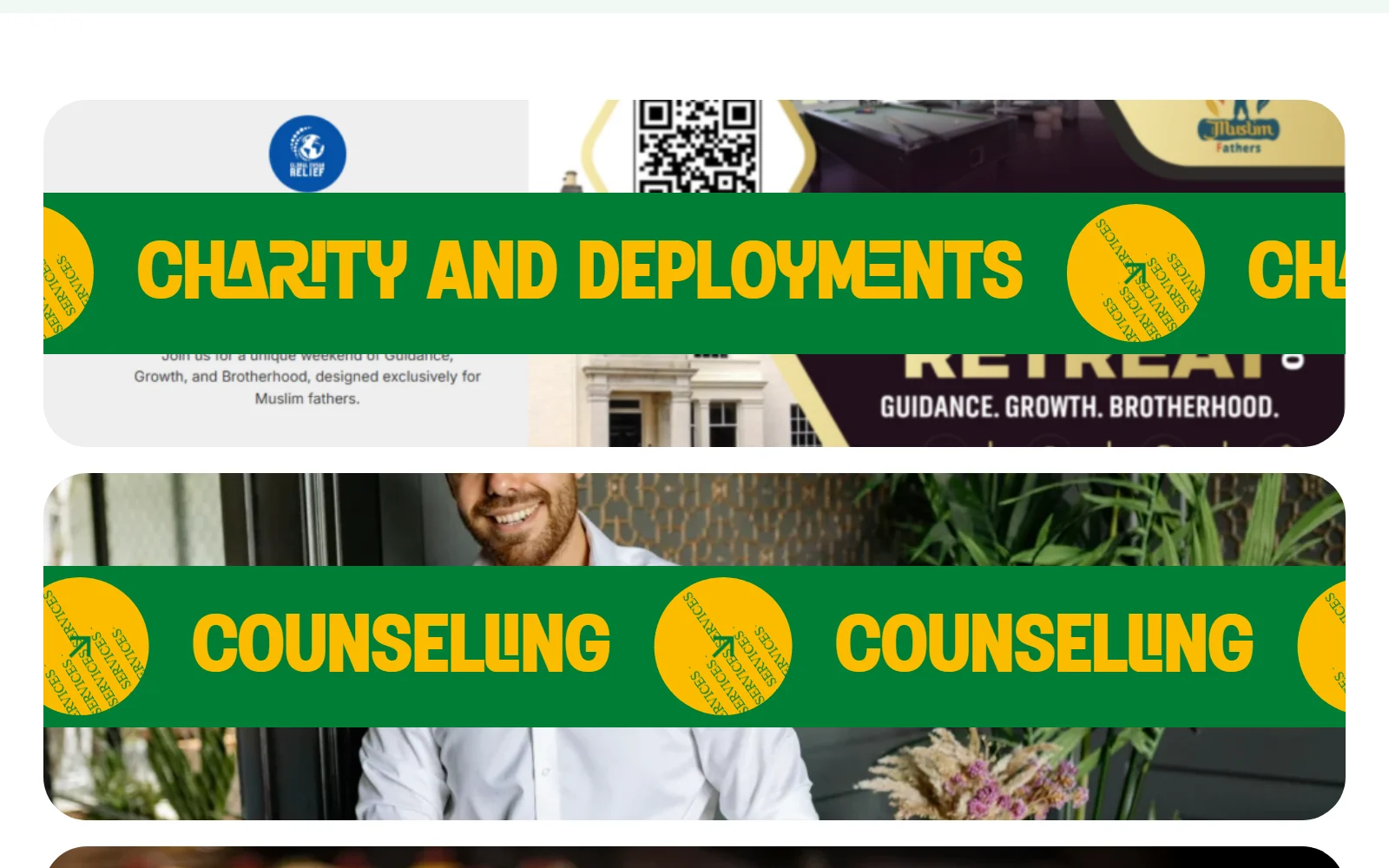
Services, properly structured
Each service is its own entry rather than a paragraph on a shared page, so the offer can grow and reorder without a rebuild.
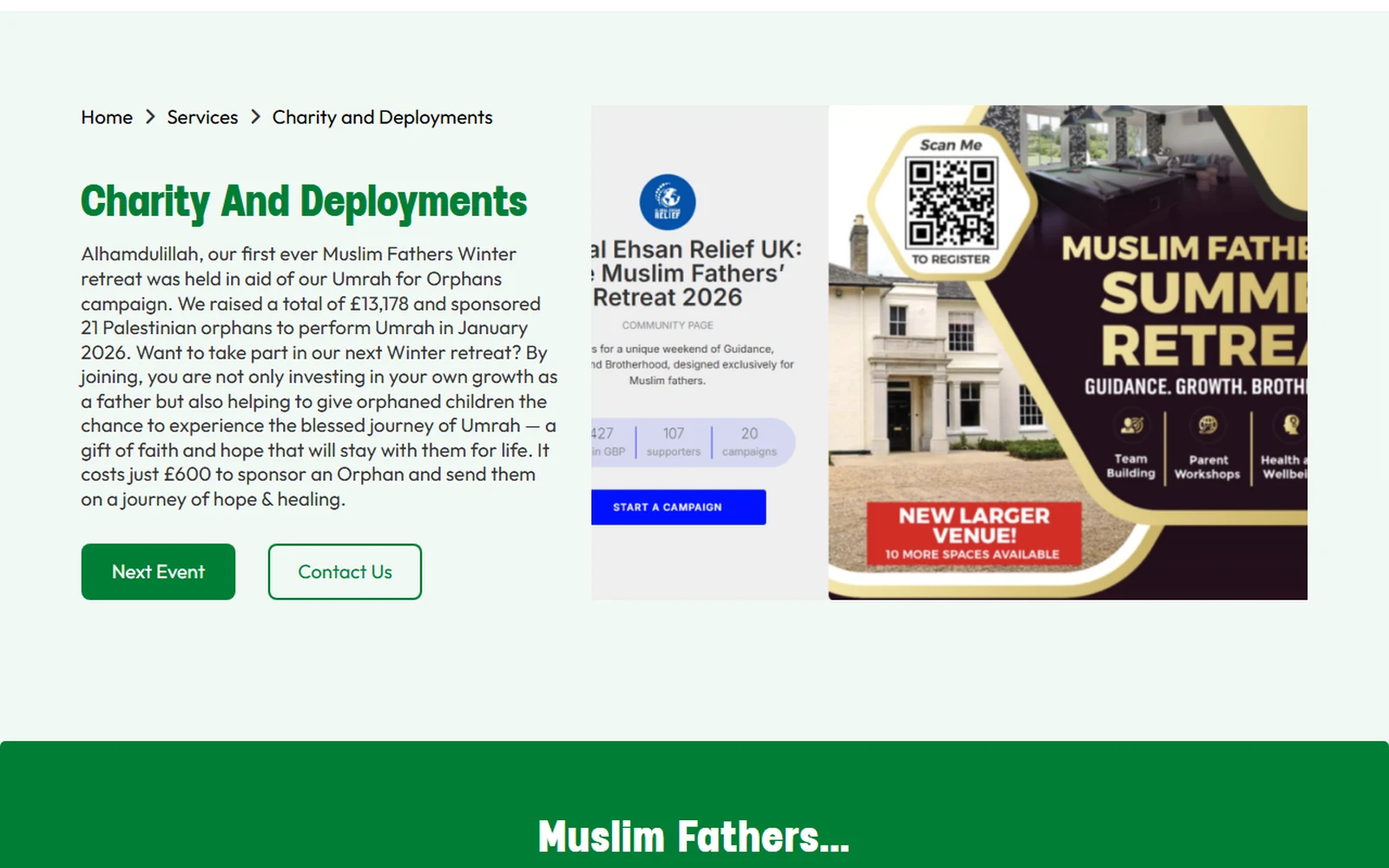
A donation page that makes the case
Giving gets a proper destination rather than a button in the footer — a page with room to explain what support pays for and why it matters.
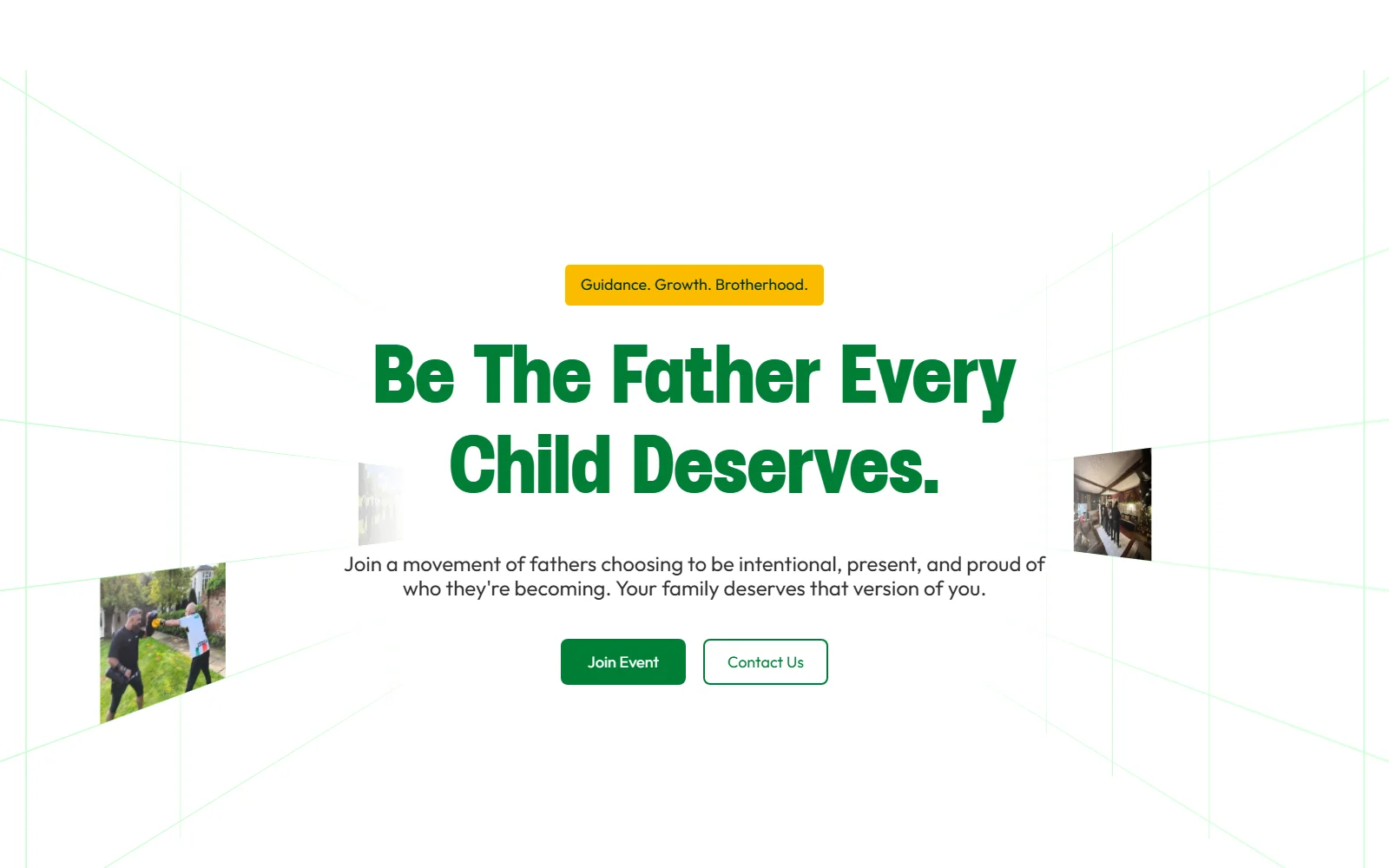
A hero worth remembering
The opening of the home page carries the whole tone of the organisation: warm, welcoming and confident rather than corrective. It is the part people describe when they describe the site.
Built on custom post types throughout
A large site with several distinct kinds of content, each held in a structure designed for it. That is what stops a site this size becoming unmanageable by its second year.
What changed
They publish, we do not
Events, resources and services are all added by the team. No developer sits between the organisation and its own announcements.
A site that can keep growing
Structured content types mean the hundredth page costs no more effort than the tenth — which for an organisation adding constantly is the whole game.
Giving has somewhere proper to happen
A donation page with room to make the argument, rather than a link hidden at the bottom of the page.
A first impression that holds
A hero and a palette they are genuinely pleased with, on a subject where warmth matters more than polish.
In their words
Pixelgbra understood that Muslim Fathers needed more than a polished website—it needed to feel trustworthy, welcoming and easy for fathers to engage with. The team listened carefully, shaped our ideas with clarity and delivered a platform that genuinely reflects the community we are building.
Pixelgbra understood that Muslim Fathers needed more than a polished website—it needed to feel trustworthy, welcoming and easy for fathers to engage with. The team listened carefully, shaped our ideas with clarity and delivered a platform that genuinely reflects the community we are building.
Ali MangeraMuslim Fathers